Committees of MICAD 2026
Conference Chairs (Alphabetize by Last Name)

Prof. Alejandro F Frangi
The University of Manchester, UK
IEEE Fellow, SPIE Fellow
Diamond Jubilee Chair in Computational Medicine
Academy of Engineering Chair in Emerging Technologies
Prof. Alejandro F. Frangi FREng is the Bicentenary Turing Chair in Computational Medicine at The University of Manchester (UK), with joint appointments in the Schools of Computer Science and Health Sciences. His research spans medical image analysis, computational imaging, and precision computational medicine, including image-based modelling, AI, and in silico trials for medical devices. He has authored 320+ journal articles and held major leadership roles in the medical imaging community, including editorial and conference leadership at MICCAI and IEEE. Prof. Frangi is a co-editor of the textbook Medical Image Analysis (Academic Press, 2023). His honours include the IEEE EMBS Technical Achievement Award (2021) and election as a Fellow of the Royal Academy of Engineering (FREng, 2023). He is also a Fellow of IEEE (2014), EAMBES (2013), SPIE (2020), and MICCAI (2021), and has served as a Fellow of The Alan Turing Institute (2021–2024).

Prof. Yudong Zhang
University of Granada, Spain
Data Science and Computational Intelligence Institute
IET Fellow, EAI Fellow, BCS Fellow,IEEE Senior Member
Prof. Yudong Zhang is the Honorary Follow of World Leadership Academy, Fellow
of IET, Fellow of EAI, and Fellow of BCS. He is the Senior Member of IEEE, IES, and ACM. He
is the Distinguished Speaker of ACM. He was included in Most Cited Chinese Researchers
(Computer Science) by Elsevier from 2014 to 2018. He was 2019-2025 recipient of Clarivate
Highly Cited Researcher. He is included in World’s Top 2% Scientist by Stanford University
from 2020 to 2025. His three papers are included in UK Research Excellence Framework (REF)
2021.
His citation reached 46k in Google Scholar (h-index 115). He is/was the editor of Neural
Networks, IEEE TITS, IEEE TCSVT, IEEE JBHI, etc. He has conducted many successful industrial
projects and academic grants from NIH, Royal Society, GCRF, EPSRC, MRC, BBSRC, Hope, British
Council, Fight for Sight, and NSFC.
He served as a reviewer for notable awards and honors, including the National Academy of
Engineering (NAE) Member, Fellow of the Royal Academy of Engineering (FREng), Fellow of the
Royal Society (FRS), Marie Curie Fellowship, FIEEE, and FIET.
He has given over 120 invited talks at famous universities and top conferences, including
Harvard University, University of Birmingham, University of Sheffield, University of Surrey,
Manchester Metropolitan University, De Montfort University, Polish Academy of Sciences,
University of Warsaw, Hasselt University, etc.
He has served as (Co-)Chair for more than 80 international conferences and workshops
(including more than 30 IEEE or ACM conferences). His research outputs have been reported by
more than 80 news press, such as Reuters, BBC, Telegraph, Mirror, Physics World, UK Today
News, EurekAlert! Science News, India Times, Association of Optometrists (AOP) news, Medical
Xpress, etc.
General Co-Chairs
(Alphabetize by Last Name)

Prof. Ryuji Hamamoto (浜本 隆二)
Tokyo Medical and Dental University, Japan
Division Chief, National Cancer Center Research Institute, Japan
Representative Director, Japanese Association for Medical Artificial Intelligence
(JMAI)
Dr. Ryuji Hamamoto has been involved in cancer research for more than 20 years since he started his career at the Institute of Medical Science, the University of Tokyo. He was appointed an assistant professor at the Institute of Medical Science, the University of Tokyo in 2001, and was an Honorary Visiting Fellow at the Department of Oncology, University of Cambridge from 2006-2007. He then returned to the Institute of Medical Science at the University of Tokyo, but from 2012 he conducted cancer research at the University of Chicago Medicine as an Associate Professor. In January 2016, he was appointed as a Division Chief of the National Cancer Center, where he has pioneered the development of cancer research using AI technology in Japan. Since April 2016, he has been a professor at the Tokyo Medical and Dental University Collaborative Graduate School, and since April 2017, he has been a team leader at the RIKEN Center for Advanced Intelligence Project, and since 2018, he has been the Representative Director of the Japan Society for Medical AI (JMAI).
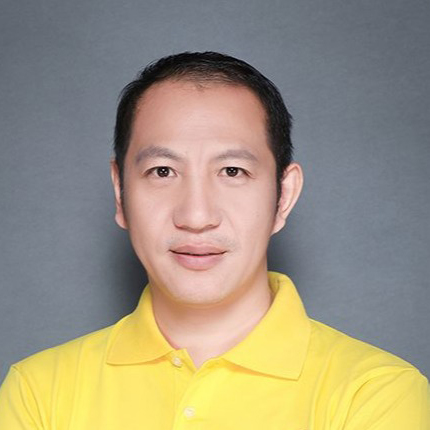
Prof. Linlin Shen
Shenzhen University, China
Vice Dean, School of Artificial Intelligence
Linlin Shen (Senior Member) is currently a Pengcheng
Scholar Distinguished Professor at School of Artificial Intelligence, Shenzhen
University, Shenzhen, China. He is also a Honorary professor at School of Computer
Science, University of Nottingham, UK. He serves as the Deputy director of National
Engineering Lab of Big Data Computing Technology, Director of Computer Vision Institute,
AI Research Center for Medical Image Analysis and Diagnosis and China-UK joint research
lab for visual information processing. He also serves as the Co-Editor-in-Chief of the
IET journal of Cognitive Computation and Systems, Senoir Area Editor of IEEE Trans. on
Image Processing, Senior Editor of Expert Systems With Applications, and Associate
Editor of Pattern Recognition and Scieitific Data. His research interests include deep
learning, facial recognition, analysis/synthesis and medical image processing. Prof.
Shen is listed as the“Most Cited Chinese Researchers”by Elsevier, “Top 0.05% Highly
Ranked Scholar”by ScholarGPS, and listed in a ranking of the“Top 2% Scientists in the
World” by Stanford University. He received the“Best Paper Runner-up Award”from the
journal of IEEE Transactions on Affective Computing, "Top Cited Article" from Wiley, and
“Most Cited Paper Award” from the journal of Image and Vision Computing. His cell
classification algorithms were the winners of the International Contest on Pattern
Recognition Techniques for Indirect Immunofluorescence Images held by ICIP and ICPR. His
team has also been the runner-up and second runner-up of a number of competitions for
object detection in remote sensing images, nucleus detection in histopathology images
and facial expression recognition.

Prof. Moi Hoon Yap
Manchester Metropolitan University, UK
Moi Hoon Yap is a Professor of Image and Vision Computing
at
The Manchester Metropolitan University, and holder of The Royal Society Industry
Fellowship
(2016-2018). She received her PhD in Computer Science from Loughborough University in
2009.
After her PhD, she worked as Postdoctoral Research Assistant (April 09 - Oct 11) in the
Centre for Visual Computing at the University of Bradford. She serves as an Associate
Editor
for Computer Methods and Programs in Biomedicine, and reviewers for IEEE
transactions/journals (Image Processing, Multimedia, Cybernetics, biomedical health and
informatics). Her research is funded by Royal Society, EU funding, Innovate UK, CRUK,
EPSRC
and industrial funding. Her research expertise is in computer vision, image/video
processing
on facial analysis and medical image analysis.

Prof. Xiahai Zhuang
Fudan University, China
Professor Xiahai Zhuang works with School of Data Science,
Fudan University, China. He obtained PhD from the Centre for Medical Image Computing,
University College London. His research interests include medical image analysis,
interpretable artificial intelligence and statistical learning. He serves as editorial
board
member/ associate editor for IEEE TMI, Med Image Anal, Neural Networks, Neurocomputing,
Mathematics. He is elected Board Member (2022-2026), and Executive Director (2024-2027)
of
the MICCAI Society. His interpretable Bayesian deep segmentation work won the
Elsevier-MedIA
1st Prize and Medical Image Analysis-MICCAI Best Paper Award 2023.
Program Committee Chairs

Asst. Prof. Ruidan Su
Shanghai Jiao Tong University (SJTU), China
IEEE Senior Member
Dr. Ruidan Su received his Ph.D. in Computer Application Technology from
Northeastern University, in 2014. From 2015 to 2020, he served as an Assistant Professor at
the Shanghai Advanced Research Institute, Chinese Academy of Sciences. He is currently with
the Artificial General Intelligence (AGI) Institute, School of Computer Science, Shanghai
Jiao Tong University (SJTU). Dr. Su has published over 37 peer-reviewed papers in journals
and conference proceedings. His research interests include artificial intelligence, AI for
materials science, and AI applications in medical imaging and finance. He is an IEEE Senior
Member and has served as Program Chair of the MICAD conference series since its inaugural
edition in 2020.

Prof. Dr. Joseph M. Reinhardt
The University of Iowa, IA, USA
IEEE Fellow, AIMBE Fellow
Director, The Reinhardt Biomedical Imaging Lab
Roy J. Carver Chair in Biomedical Engineering
Joseph M. Reinhardt is the Roy J. Carver Chair of Biomedical Engineering at the University of Iowa. He received the BS degree from Carnegie Mellon University, the MS degree from Northeastern University, and the PhD degree from Penn State University, all in Electrical Engineering. Dr. Reinhardt worked for several years in industry as a radar systems engineer. He is currently Professor and Department Executive Officer (chair) of the Roy J. Carver Department of Biomedical Engineering. Dr. Reinhardt teaches courses in the areas of computer programming, biomedical instrumentation, and medical imaging. Dr. Reinhardt is a fellow of the Institute of Electrical and Electronic Engineers (IEEE) and a fellow of the American Institute of Medical and Biological Engineering (AIMBE). His research interests are in the area of medical image processing, with a special emphasis on pulmonary imaging. Dr. Reinhardt has received research support from the National Institutes of Health, National Science Foundation, the Roy J. Carver Charitable Trust, and the Whitaker Foundation. Dr. Reinhardt, together with colleagues from The University of Iowa, founded VIDA Diagnostics, an Iowa-based medical imaging software company that focuses on computer-aided diagnosis and image-guided interventions for lung disease.
Technical Program Committee Chairs
(Alphabetize by Last Name)

Prof. Shadi Albarqouni
Professor of Computational Medical Imaging Research at University of Bonn, Germany
AI Young Investigator Group Leader at Helmholtz AI
Senior Research Affiliate at TU Munich
Shadi Albarqouni is a Palestinian-German Professor of Computational Medical
Imaging Research. He received his B.Sc. and M.Sc. in Electrical Engineering from the IU
Gaza,
Palestine, in 2005, and 2010, respectively. In 2012, he received the DAAD research grant to
pursue his Ph.D. at the Chair for Computer Aided Medical Procedures (CAMP), Technical
University
of Munich (TUM), Germany. His AggNet paper, published at the Special Issue on Deep Learning
at
the IEEE Transaction on Medcial Imaging (IF: 10.048), was among the first ones on Medical
Imaging with Deep Learning and has been featured as the top downloaded article for a couple
of
years at IEEEXplore.
Since Nov. 2020, Albarqouni has been appointed as an AI Young Investigator Group Leader at
Helmholtz AI. The aim of Albarqouni’s Lab. is to develop innovative deep Federated Learning
algorithms that can distill and share the knowledge among AI agents in a robust and
privacy-preserved fashion. Since Jan. 2022, Albarqouni has been appointed as a W2 Professor
of
Computational Medical Imaging Research at the Faculty of Medicine, University of Bonn.
Albarqouni has more than 100 peer-reviewed publications in both Medical Imaging Computing
and
Computer Vision published in high impacted journals and top-tier conferences. He serves as a
reviewer for many journals, e.g., IEEE TPAMI, MedIA, IEEE TMI, IEEE JBHI, IJCARS and Pattern
Recognition, and top-tier conferences, e.g., ECCV, MICCAI, MIDL, BMVC, IPCAI, and ISBI among
others. He is also an active member of MICCAI, BMVA, IEEE EMBS, IEEE CS, and ESR society.
Recently, Albarqouni has been elected as a member for the European Lab for Learning and
Intelligent Systems ( ELLIS), the Arab German Young Academy ( AGYA), and the Higher Council
for
Innovation and Excellence in Diaspora ( HCIE). Since 2015, he has been serving as a PC
member
for a couple of MICCAI workshops, e.g., COMPAY, DART, DCL, FAIR among others. Since 2019,
Albarqouni has been serving as an Area Chair in Advance Machine Learning Theory at MICCAI.
Recently, he has been serving as a Program Co-Chair at MIDL'22 in Swizterland, and as an
Organizing Committee Member at ISBI'22 in India, MICCAI'24 in Morocco.
His current research interests include Interpretable ML, Robustness, Uncertainty, and
Federated
Learning. He is also interested in Entrepreneurship and Startups for Innovative Medical
Solutions with limited resources.

Asst. Prof. Thi Hoang Ngan Le
University of Arkansas, USA
Dr. Le is currently an assistant Professor in the Department of Computer Science & Computer Engineering at University of Arkansas. She was a research associate in the Department of Electrical and Computer Engineering (ECE) at Carnegie Mellon University (CMU) in 2018-2019. Her current research interests focus on Image Understanding, Video Understanding, Computer Vision, Robotics, Machine Learning, Deep Learning, Reinforcement Learning, Biomedical Imaging, SingleCell-RNA. Her publications appear in top conferences including CVPR, MICCAI, ICCV, SPIE, IJCV, ICIP etc, and premier journals including IJCV, JESA, TIP, PR, JDSP, TIFS, etc. She has co-authored 55+ journals, conference papers, and book chapters, 6+ patents and inventions. She co-organized the Deep Reinforcement Learning Tutorial for Medical Imaging at MICCAI 2018, Medical Image Learning with Less Labels and Imperfect Data workshop at MICCAI 2019, Precognition: Seeing through the Future at CVPR 2019. She has served as a reviewer for 10+ top-tier conferences and journals, including TPAMI, AAAI, CVPR, NIPS, ICCV, ECCV, MICCAI, TIP, PR, TAI, IVC, etc.

Asst. Prof. Duygu Sarikaya
University of Leeds, UK
Dr. Duygu Sarikaya is an assistant Professor at University of Leeds, School of Computing. Her research interests span defining the technologies of future, artificial intelligence powered, healthcare applications. More specifically, she works on surgical vision and perception, and medical image computing. Dr. Duygu Sarikaya served as a board member of Women in MICCAI, and formerly was a member of the Student Board and the Educational Initiative at MICCAI.
Technical Program Committee Co-Chair

Asst. Prof. Yanmei Tie
Harvard Medical School, USA
Dr. Tie is an Assistant Professor of Neurosurgery at Brigham and Women's Hospital, Harvard Medical School. Dr. Tie received her Ph.D. in Biomedical Engineering and M.S. in Electrical Engineering from Louisiana Tech University. Dr. Tie's research focuses on improving brain mapping for surgical planning and guidance by developing multi-modal neuroimaging techniques, focusing on functional magnetic resonance imaging fMRI and diffusion MRI. She has developed easy to perform resting state and movie watching fMRI paradigms for the patients who cannot perform regular task based fMRI due to language or other neurological deficits. Dr. Tie is also interested in applying brain connectivity to understand the neural mechanism of disease pathophysiology and develop biomarkers for neurological disorders. The goals are to inform therapeutic development and improve patients’ overall well-being.
Publicity Chair

Assoc. Prof. Grace Yao-jie Xie
The Hong Kong Polytechnic University, Hong Kong SAR, China
Assoc. Prof. Yao Jie Xie currently works at the School of Nursing, The Hong Kong Polytechnic University. Yao Jie does research in Public Health, Nursing, and Epidemiology.
Local Chair
William Wang, University of Leicester, UK
Technical Program Committees (Alphabetize by Last
Name)
Dr. Aymen Saad Abd Alameer, Al-Furat Al-Awsat Technical University, Kufa, Iraq
Asst. Prof. Faisal Saleh Zuhair Alshomrani, Taibah University, Saudi Arabia
Asst. Prof. Raja Waseem Anwar, German University of Technology, Oman
Dr. Mohd Farid bin Atan, Universiti Malaysia Sarawak, Malaysia
Mr. Victor Alves, Atrys Health, Portugal
Asst. Prof. Navchetan Awasthi, U\IIT Jodhpur, India
Dr. Abhirup Banerjee, University of Oxford, UK
Prof. Walid Barhoumi, University of Carthage, Tunisia
Dr. Kevin BELLENGER, Brest universitary hospital, France
Asst. Prof. Ander Biguri, University of Cambridge, UK
Dr. Anna Breger, University of Klagenfurt, Austria
Dr. Dima Bykhovsky, SCE - Shamoon College of Engineering, Israel
Dr. Yuqi Cao, Zhejiang University, China
Dr. Oezdemir Cetin, TU Darmstadt, Germany
Dr. El-Mehdi Chakour, CNRS / ESIEE Paris, Université Gustave Eiffel, France; LaRSI Laboratory, Sidi Mohamed Ben Abdellah University (USMBA), Morocco
Assoc. Prof. Qiang (Shawn) Cheng, University of Kentucky, USA
Dr. Weijie Chen, U.S. Food and Drug Administration, USA
Prof. Xueli Chen, Xidian University, China
Assoc. Prof. Xiaoyu Cui, Northeastern University, China
Assoc. Prof. Shengwei Cui, Hebei University, China
Prof. George Du, University of Saint Joseph, Macau
Asst. Prof. Moti Freiman, Technion-Israel Institute of Technology, Israel
Dr. Yimin Fu, Hong Kong Baptist University (HKBU), Hong Kong, China
Prof. David Haynor, University of Washington, United States
Dr. Nicholas Hindley, University of Sydney, Austrilia
Assoc. Prof. Azhar Imran, Beijing University of Technology (BJUT), China
Dr. Behnam Javanmardi, University Hospital Bonn, Germany
Prof. Dr. Xiaoyi Jiang, University of Münster, Germany
Asst. Prof. Davood Karimi, Harvard University, United States
Assoc. Prof. Mohammed Sayim Khalil, Halic University, Turkey
Assoc. Prof. Boon Yin Khoo, Universiti Sains Malaysia, Malaysia
Asoc. Prof. Minjeong Kim, University of North Carolina at Greensboro, United States
Asst. Prof. Kyungsu Kim, Seoul National University, South Korea Asst. Prof. Songshi Li, Chiba University, JapanAsst. Prof. Xiaoping Li, Tianjin University, China
Ms. Katja Löwenstein, Salzburg University of Applied Sciences, Austria
Ms. Minh Sao Khue Luu, Novosibirsk State University, Russia
Dr. Fay Manning, University of Exeter, UK
Assoc. Prof. Isabelle Miederer, University Medical Center of the Johannes Gutenberg University Mainz, Germany
Asst. Prof. Aleksandar Milenkovic, University of Nis, Serbia
Asst. Prof. Shereen Moataz Afifi, German University in Cairo (GUC), Egypt
Asst. Prof. Guochen Ning, Tsinghua University, China
Asst. Prof. Takayuki Okamoto, Chiba University, Japan
Cristiano Patrício, University of Beira Interior, Portugal
Prof. Hongliang Ren, The Chinese University of Hong Kong, Hong Kong SAR, China
Dr. Sabrina Ramnarine, King’s College London, London & Guy’s and St. Thomas’ NHS Foundation Trust, UK
Prof. Dr. Thomas Schultz, University of Bonn, Germany
Dr. Sandeep Singh Senga, Cardiff Metropolitan University, UK
Assoc. Prof. Hossain Md Shakhawat, Kochi University of Technology (KUT), Japan
Dr. Masoud Shakiba, Unitec Institute of Technology, Auckland
Assoc. Prof. Dongjing Shan, Southwest Medical University, China
Assoc. Prof. Abdulhamit Subasi, University at Albany, SUNY, United States
Assoc. Prof. Tao Sun, Shenzhen Institutes of Advanced Technology, Chinese Academy of Sciences, China
Asst. Prof. Xiao Jian Tan, Tunku Abdul Rahman University of Management and Technology (TAR UMT), Malaysia
Assoc. Prof. Chao Tong, Beihang University, China
Asst. Prof. Longwei Wang, University of South Dakota, USA
Prof. Guotai Wang, University of Electronic Science and Technology of China, China
Assoc. Prof. Jelmer Wolterink, University of Twente, NetherlandsDr. Soheil Varastehpour, nitec Institute of Technology, Auckland
Prof. Songhua Xu, Xi'an Jiaotong University, ChinaProf. Xiaoyin Xu, Zhejiang University, China
Ts. Faridah Binti Yahya, UniKL Malaysian Institute of Information Technology, Malaysia
Prof. Lei Yang, Zhengzhou University, China
Prof. Gang Yu, Zhejiang University, China
Dr. Hoda Zamani, slamic Azad University NajafAbad Branch, Esfahan, Iran
Dr. Zhicheng Zhang, JancsiTech, China
Assoc. Prof. Bin Zhao, Guilin University of Electronic Technology, China
Prof. Xiaojun Zhou, Central South University, China